
In the modern era, we don’t hear the term “gadfly” quite so much. It’s more common to hear people called something like “troll” or “shitposter” or something else from the realm of social media. I don’t think they’re the same things in any way at all. Trolls and shitposters and their ilk are doing it “for the lulz”. The goals are amusement, creating chaos, trying to make someone look bad… in a word, bullying. The gadfly, though, agitates with a genuine goal of making things better for everyone by challenging calcified views, speaking truth to power, and asking the uncomfortable questions that actually do need to be addressed if things are to move in a better direction. Trolls may claim that’s their goal, but gadflies really *do* want that. Plato recognized this and described Socrates as a gadfly in the Apology, when Socrates was on trial for impiety against the gods and corruption of the youth of Athens. With his dear friend and mentor’s life hanging in the balance, I don’t believe that Plato saw Socrates as a troll, but rather as an agitator for better.
I got to thinking about the gadfly while I was at a scientific conference recently. Like many conferences, there was a great deal of stimulating scientific discussion amongst experts and thought leaders. New ideas were offered. Old ideas were challenged. Exciting new findings were shared. Really good stuff! Along with the camaraderie, this is what most of us love best about scientific conferences. Like many scientific conferences, there was also plenty of talk about what is not available but is needed to make progress – more money, bigger databases, the newest technique for looking in ever more detail at individual cells, better access to specific things that would allow clinical trials to happen, all that kind of thing.
What awoke my inner gadfly was that phrase “like many conferences.” These same kinds of conversations happen all the time at scientific conferences across lots of different areas of research. And I often leave feeling the same way, namely, that we’re all going to go back to our labs and offices and keep doing what we’ve been doing and the things that are barriers to progress now will be barriers to progress in one or two or five or ten years. I also often think, “Why is no one asking, ‘Okay, everyone. We say the same things every year. What is it *really* going to take to get us from where we are today to an actual thing that might help people? What can we do differently, and together? How do we break our analysis paralysis and not let the theoretical perfect be the thing that holds back the actual good?’”
Some of it certainly has to do with the kind of inertia common to all human endeavors. “It is what it is” sometimes feels like a magical incantation intended to bring a sense of resigned acquiescence to circumstances at hand. Accepto yourlottus! But in science, there are some very good reasons why the questions intended to break inertia and gridlock might go unasked. These are not questions that people are always comfortable with. They can be seen as a challenge to the status quo of both an individual’s research efforts and that of the field as a whole. Though science is supposed to challenge the status quo, there is no guarantee at all that the status quo will be happy about it. The gadfly can be unwelcome and irritating because they might raise issues that suggest a change in activities or approach is needed, sometimes including a kind of collaboration that prioritizes the achievements of the group over those of the individual. Trouble is, whether a scientist’s papers get published or not, whether their grants get funded or not, whether they get promoted and tenured at their institution or not… all of that depends on something very much like a personal brand that exists within a very pronounced and very human hierarchy of power. Questioning a senior person in a way that irritates them can have very real consequences, even when it’s the right thing to do for the science and for those whom the science serves. The questions aren’t always safe for scientists to ask out loud, especially when already limited funding for research is choked off, science itself is under attack, the universities that are typically at the heart of that science are under attack, and trust in science is at an all-time low.
Science doesn’t need assholes. There are always plenty of those in any field. What science *does* need are gadflies. Gadflies are critical pollinators in science. Sitting in this conference, it occurred to me that I could try to fill that need. I could ask the questions like, “Okay, if *this* isn’t attractive as a thing to try, what *would* be? If we were told, ‘You HAVE to have something in a clinical trial within a year’ what would we do?” I can do this because I don’t compete for grants. I don’t have to publish papers (I love doing so, but my jobs don’t depend on it). It doesn’t matter if you love my lab’s data and techniques or not, because that’s not how I support the biomedical research enterprise. So I can make you a little uncomfortable with these questions and still stand shoulder to shoulder with you to make progress on the answers, together.
It isn’t talked about as much as some other changes over the last year and a half, but this is something that’s been lost with the decimation of the scientific workforce at NIH. This is especially true of the extramural scientific workforce – those scientists who are Program Officers, Scientific Review Officers, Special Advisors, Institute/Center Directors, and all the other folks who make NIH-supported science happen by supporting all the teams outside NIH itself. As an NIH scientist in the extramural workforce, I could ask questions that I thought needed to be asked to make the science better or to help the science better serve the public. I could then partner with the scientific community to orient on a plan for better. I could tell the truth to whomever I was talking to, without fear of retaliation coming from someone being angry or offended about being challenged. I was protected from retaliation, and I represented rigorous science in service to all. The success of the enterprise as a whole was my success. I work for the public, and I advocate for the better health of the public.
Obviously there is the loss of those scientists who have left federal service for the time being, like myself, like my friends who have been fired/RIF’d, like my friends who have been forced into retirement, like my friends who have had programs simply ended out from under them, and so many others. But there is also the loss of the ability of those who remain in federal service to speak truth to power without fear of retaliation. During the pandemic, there was an investigator who really pushed to have me circumvent usual processes for funding their grant for reasons entirely related to meeting their local conditions for having people working in the lab during lockdown. It had nothing to do with the science itself, with serving public health, or anything like that, so I of course said no. When this investigator started namedropping a Senator and contacting my direct supervisor, I had no fear whatsoever. It wasn’t in the best interest of the science or the public, and it wasn’t how we do things. So no, we’re not doing that. And we didn’t. Today, I might feel very, very differently. I’d make the same decision but with the knowledge that I might be fired, and knowing that someone with children at home, or elders to care for at home, or chronic health issues, or any number of other life circumstances would be forced to choose differently.
We need more gadflies to keep the science and scientific enterprise pollinated and healthy. I worry that the gadfly is an increasingly endangered species. Science tells us that when critical pollinators become endangered or disappear, the entire ecosystem is threatened. And by the time you recognize that they’re disappearing, it can be too late.
What Can We Do?
Invite or designate people to serve as gadflies. Scientists, this is something you can do right now, at no cost. If there are people you know who are excellent agitators for better, invite them into your discussions and working groups. Better yet, make “gadfly” a designated role or duty in your gatherings. Keep it lighthearted but keep it real. Anonymize if needed to ensure honesty without fear of retaliation or hard feelings (readily available technological solutions can help with this – e.g., stuff like Slido or Mentimeter). Make sure that you’re pushing yourselves to be as rigorous and committed to progress as the people you serve expect you to be doing.
Restore gadflies in federal service. The federal scientific workforce should be an ideal place for gadflies to thrive. They don’t have to publish or perish. Their jobs aren’t dependent on getting the next grant. They can say what needs to be said and help do what needs to be done to really move the field forward. This doesn’t require any special protections or provisions, only those that have applied to all full-time federal employees prior to 2025. Bringing the size of the federal biomedical workforce back to what it needs to be and restoring basic protections for civil servants would get us most of the way there. If you want to help make this happen, let your Congressional elected officials know about this specific need. The NIH budget could triple and this problem would still exist if not directly addressed.
Create new gadflies. There are people who are really, really good at agitating in productive, generative ways. And then there are people who think they are but really they just come off as jerks. Identify the true gadflies from the pseudogadflies, and then have the true gadflies teach trainees and early career folks how to do it well. You could even create whole training modules around how to be a true gadfly. It could end up looking a lot like a kind of useful activism, one that is uniquely science-y and truly helpful. It could also be the beginnings of a culture change in science where we can welcome honest challenging questions *and* can recognize and deal with bad faith troll-like behaviors.
And this is where this piece was originally going to end, probably with this quote from Sinéad O’Connor’s haunting song “Black Boys on Mopeds”: These are dangerous days/To say what you feel is to make your own grave.
But then something happened, and I’ll talk about it in Part 2.
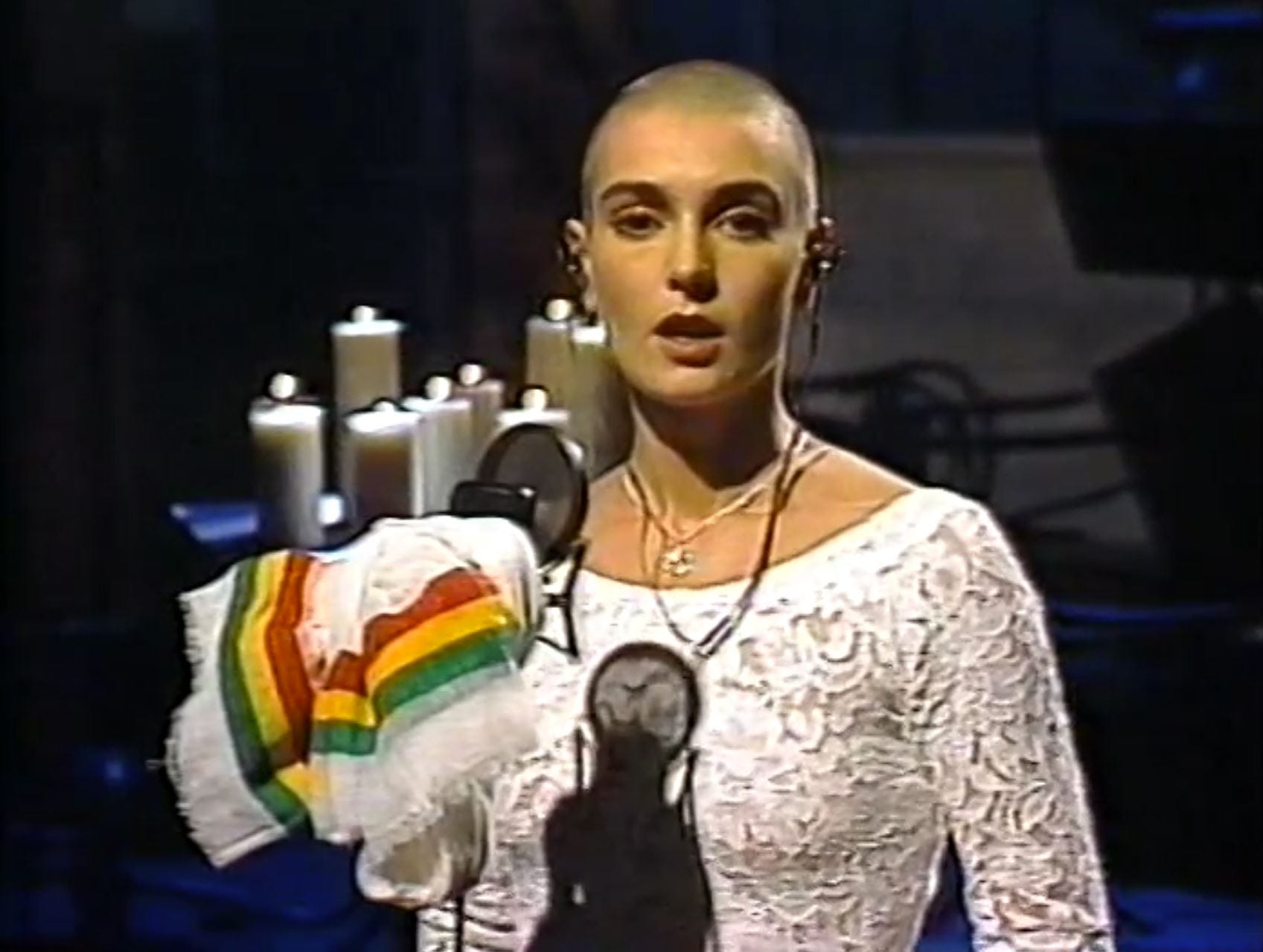
Speaking of gadflies. I didn’t understand when I was 15. I do now, at least a bit more than I did then.