
“There is a saying that grief is love with nowhere to go, but grief with nowhere to go is… this.”
This quote is from Sarah Kendzior’s most recent book “The Last American Road Trip”. I bought it as a preorder in December 2024, received it in March 2025, and just started reading it a couple of weeks ago. I waited so long because I know her writing well. I knew I would have to make sure I was ready to be leveled by facts, analyses, ideas, and feelings about the first quarter of the 21st century and what feels like the American end times. I had just resigned from federal service at the end of March 2025 when the book arrived, so I was nowhere near ready then. I knew this book in particular would hit hard, and it has. The “this” in the quote above is the state of America in the first half of 2021. She is talking about the pandemic, and the January 6 insurrection, and the protests and counterprotests, and the rage, and the hurt, and the divisions, and all of it. All of this is what happens when grief has nowhere to go.
More and more, I believe there’s this massive unhealed and unacknowledged wound of grief that the pandemic might not have created but was certainly made much, much worse by the pandemic. That may sound obvious, but I have yet to see robust efforts at the kind of large scale deep healing we need. Some want to relitigate the past and assign blame. Some want to just move on, put the pandemic in the rearview mirror and get on with AI or whatever we’re told the future holds. And more and more, I believe that until we get serious about trying to treat this wound of grief, we won’t be able to tend to other wounds very successfully. In a trauma resuscitation, “distracting injuries” can prevent some other injuries from being assessed accurately. If you have a big hole in your chest, it’s hard to focus on whether your neck is sore or not, and the trauma team can’t accurately tell whether you have a dangerous cervical spine injury or not, so the hard plastic immobilizing collar stays on your neck.
Our collective wound of grief isn’t always as obvious as a hole in the chest. Then again, sometimes massive injuries aren’t as obvious as you’d expect until you really look. That’s what those scissors are for that every trauma team member carries. They’re called trauma shears, and you use them to cut the outer coverings off so you can really look for the massive wounds that might be hiding.
Trauma Shears for Grief
One year ago, I was at a dinner with a group of friends and colleagues in New York City. It was during the thick of campaign season for the upcoming mayoral election in the city, the election that would go on to change the political conversations not just in NYC but across the country. The upcoming election was a major topic of conversation. But this was a bunch of healthcare workers and scientists all affiliated with an academic medical center, and in the summer of 2025 that meant the ongoing assaults on medicine, science, and higher education were on everyone’s minds. That feeling of not knowing what the future might look like or even if there would be a future was all too reminiscent of the feelings during the pandemic, and it wasn’t too surprising that the conversation then came around to NYC during COVID.
Several of the people at the table had been integral to coordinating major components of New York City’s pandemic responses in both the medical care and research domains. In case you’ve succeeded in forgetting, NYC was the hardest hit area in the United States. Almost 50,000 people in the city died between 2020 and 2023. This is nearly impossible to comprehend. It’s the equivalent of both of the towns in southern Illinois and southern Indiana where I grew up being entirely destroyed, no survivors… and then both of those little towns being completely repopulated and destroyed again, with no survivors, all in 3 years’ time. We all saw the trucks brought in to hold the dead, a scene straight out of Stephen King’s apocalyptic novel “The Stand”. We all saw pictures of the 68-bed field hospital set up in Central Park to care for COVID patients. This field hospital included 10 ICU beds. People were on ventilators and had central lines placed in Central Park. The hospital in the town where I grew up only has 45 beds total. The scene was too horrific even for Stephen King’s writing yet all too real in the spring of 2020.
Many of the people at this dinner had been through hell together, and they had brought one another and many, many other people through that hell. The people at the table had survived and bonded in the ways that happen in ICUs and in times of great strife and danger. Some of their scars were visible if you looked around the table with the right kind of eyes, to borrow a line from Hunter Thompson. But the conversation became trauma shears, and closer inspection revealed major wounds that surprised me then and surprise me still.
I was sitting next to a person who is a department head and nationally recognized leader in compassionate cutting-edge medicine. This person won awards for their leadership before, during, and after the pandemic, and rightly so in all cases. Seated directly across the table from us was the research coordinator for the department. This is the person who makes all the research in the department actually go, including all the research this department conducted during the pandemic. These two people have worked together for a very long time, and they clearly both like and trust one another. As the conversation moved into talking about things that happened during the pandemic, the research coordinator became visibly upset. It became clear that they were still incredibly angry that they had been forced to take a very new vaccine to keep their job, and that their expertise in evaluating risk and benefit in the face of uncertainty to make a decision that was right for them and for those they serve was completely dismissed. They were still hurt that their boss and friend across the table had been a key factor in that requirement. And it was clear by the looks on both of their faces that these two colleagues and friends had never really talked about this before that moment at dinner.
The department head, it turned out, also still had some very serious wounds. They recalled the fear of being thrust into a very high level decision-making position with lots of authority and essentially zero preparation or decisional support. They remembered a call with the leadership of their entire health system during which it became clear that leadership was going to do whatever the department head said, and the department head’s own fears and anxieties did not and could not matter. They remembered riding the subway to work early one cold morning, bent almost double from exhaustion and the weight of responsibility of trying to save lives, save careers, save families, save this part of the world. A man got into the same subway car, saw the medical center logo on their bag, and literally spit on them and shouted about how this was all their fault and he hoped they died from the “kung flu.” I don’t know for sure, but I got the strong sense that the department head had never shared these stories before this dinner, at least not with the research coordinator.
At first, the two friends sitting across the table from one another couldn’t quite see each other’s pain. The department head had longed for the vaccine, had begged for it along with the masks and other PPE that the research coordinator had so much resentment over. How could someone feel anything other than a tiny blip of relief when the vaccine was available? Was the research coordinator an antivaxxer and conspiracy theorist, with everything they had seen and been through? The research coordinator hadn’t had anyone spit on them or scream in their face on a mostly empty subway car at the crack of dawn about how they had caused this. How could the department head feel anything other than fully supported? Couldn’t they hear the cheers and banging of pots and pans every evening? But as they talked and revealed wounds that had waited literal years to see the light of day, they started to see one another just a little bit. Their grief became just a little bit more visible.
It was very clear that the conversation was making others at the table quite uncomfortable. One person said, “Hey, maybe we should wait until we have a therapist available or something. Time and place, y’know?” But this, too, is so on brand for grief in general and for the wounds of grief we’re all carrying from the last several years. People don’t know how to be present with and for the grief of another, often not even a loved one. I understand. Grief sucks. It hurts and it’s heavy and scary and takes up space and makes it hard to think or breathe. In our culture, we learn to ignore grief, to minimize it, to try to fix it, to attack it… anything to make it smaller or go away altogether. We try to do it with our own grief, and we believe that we’re helping someone if we can do it with their grief.
I’ve recently learned a lot about grief up close through the eyes of my chosen sister whose husband died by suicide in February 2024 after a prolonged struggle with combat-related PTSD following his service in the U.S. Army during our many “forever wars” (another national grief we have yet to heal… we haven’t even stopped the bleeding yet). She found his note, and then she found him. Since then, it has been impossible for some of her loved ones to be with her in her grief. Some relentlessly search for the positive, as though that might lessen the pain. Some have all but pretended that sure, 2024 was a bummer there for a bit, but everything is great now. Some have offered well meaning input of the “you just need to…” variety (and remember my unofficial rule about “just” used this way).
My lessons in being with grief started that day in 2024. It was early afternoon when she called me. I got to the house before the police had left and before his body had been taken from their home. I remember a thought while driving to the house that hit me like a thunderclap and lingered for a long time like the afterimage of the lightning bolt: There is no fixing this. There is no way to make this better. There is nothing you or anyone can do right now except make sure she is not alone. So that’s what happened. She was not alone, and grief was allowed to be present with us (as if we really had a say in the matter!). The grief was immense, bigger than the world. I was shocked that the sun dared to rise the next day, as even that felt like an affront to grief’s right to be. For a wonder, I mostly succeeded in reminding myself that I could not fix this and so don’t try. And what I’ve learned is that when we stay with grief, we’re also staying with its healing. Grief changes size and shape and color and texture, just like a wound.
At the dinner table in NYC, when someone said the conversation really ought to wait for a different time and place, I recognized grief. I pushed back and I said no, this feels really necessary and long overdue, and it’s okay. We can’t shy away from hard conversations. We need to really see and hear each other. We need about 300 million more conversations just like this one in the United States. We need to finally be present with our collective wounds of grief, so that we may also be present for their healing. Nothing got resolved that night. The grief was still too big, the wounds too ragged. But I hope something got started, at least for those two friends and maybe for their circles of loved ones.
So What Do We Do?
I don’t really know how we facilitate all of the hard conversations that need to be had. There isn’t one answer. It’s too big and complicated for one answer to work. But I can share some things I’ve been trying that might help you too.
Remember that grief is very personal. – Think about times when you’ve been hurt, or frustrated, or angry, or scared, or devastated. These can all be faces of grief, and they’re all feelings that we feel as individuals when we grieve. You’ve felt these feelings, and that means you can begin to understand how the person across from you might feel them too. The reasons might be different, probably are. But we can find the beginnings of common ground if we start with trying to connect at the level of feelings that come from our shared grief. “Do you feel me?” is a profound and important question.
See and be seen, hear and be heard. – I know how frustrated and hurt I get when I am dismissed, especially if I’m trying to communicate something that’s very important to me or very difficult for me to say. So imagine what it might feel like to try to say, “I was terrified and angry when I was told that I had to teach my children at home all day and somehow keep my job so I could also feed my children and no one could offer any ideas or help with how I might do this” and someone who knows nothing about your situation dismisses you with a scoff. Imagine what it might feel like to try to say, “I did the best I knew to do to help people, and I was so afraid of making the wrong recommendations and never felt like I was doing enough and felt incredibly guilty that I wasn’t working in the ICU” and to have someone tell you that you were both lazy and a fool and just possibly corrupt as well (I can tell you what it feels like if you’re having trouble imagining). Grief needs space, and big grief needs big space. If you’ve ever wanted space for your grief, remember that when creating the space for someone else’s grief. Even grief that’s bigger than the world won’t stay that way.
Be brave in the presence of grief. – When you are with big grief, your own or someone else’s, it’s very likely that your insides will holler at you to fix it, or find the ray of sunshine, or try to reframe it so it’s smaller, or ignore it altogether, or even retreat if none of the other things work. Just like there’s no fixing the death of a loved one, there’s no fixing the pandemic. We must heal around it, together. Staying with the grief means being brave. The wounds will heal with time and care, but not if we pretend they aren’t real or treat them as that which they are not.
Embrace the truth, because it will come out anyway. – I’m seeing the truth of our collective untended wounds of grief coming out in lots of different ways. It’s coming out in television shows (e.g., The Pitt), live-action shows (e.g., comedy specials from Rachel Bloom, Rory Scovel, many others), books (e.g., “After Shock” from the incomparable Rana Awdish), and many other outlets. I think Tony Fauci is being made the lightning rod for the truth of many people’s untended wounds of grief, and that for many people, the hearings are a version of their grief being made visible. Of course, he did not cause their wounds, and his accusers absolutely know that but are still spreading lies like manure directly into our open wounds and claiming it’s medicine (yeah, it makes me gag, too). The hearings are not about healing or embracing the truth at all, but are about profiting from our hurt. So rather than relitigate the past or pretend everything is all better now, I think we can start to heal by admitting we’re hurt and by being wary of those who have something to gain from our pain.
To be honest, none of this feels exactly right. But I’ve learned that’s also a pretty common thing with grief. I’m going to try to stay with my grief and our collective grief, seek it out and stay with it. Help it be visible and have its space. Grief’s place can be right here, so that healing can hopefully proceed.
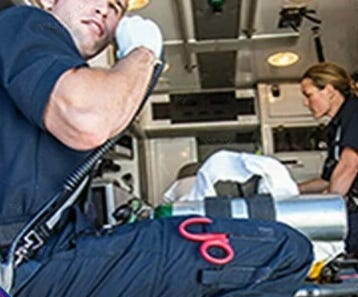
I had trauma shears in my white coat pocket as a medical student, even before I knew all of the things I was supposed to do with them. This team looks better prepared than I was, but we’re all still learning, aren’t we?