
The following piece was prepared as my “ticket” to participate in the 4th Charm City Colloquium on Law and Bioethics, co-hosted by the University of Maryland School of Law’s Law & Health Care Program and the Johns Hopkins’ Berman Institute of Bioethics and the Institute for Clinical and Translational Research on April 23-24, 2026. The theme for the colloquium was “Rebuilding Public Trust in Health and Medicine: From Erasure and Uncertainty to Recovery and Resilience”.
No one really knows where the phrase “often wrong, never in doubt” originated, but this writer first encountered it in medical school. I heard it phrased “often incorrect, never uncertain” and it was said in jest by an outstanding emergency medicine physician. She was making the opposite point, namely, that uncertainty keeps our patients safe and ensures that we don’t miss anything. Further, she was teaching me something about how to show up for and with patients. A doctor who pretends to have all the answers will be revealed as overconfident at best and a dangerous liar at worst, and usually sooner rather than later. Uncertainty is not weakness but rather it is an opportunity to partner with our patients and their families in helping them heal, to learn together and plan together in a way that fosters trust. This important teaching had a huge impact on me in large part because it was happening in the pediatric intensive care unit, a place where it could be tempting to think that technology and expertise should supersede discussions of uncertainty and partnership. Nothing could be further from the truth.
“Often incorrect, never uncertain” sounds a lot like the first part of the title of Justin Kruger and David Dunning’s famous 1999 publication “Unskilled and unaware of it: how difficulties in recognizing one’s own incompetence lead to inflated self-assessments” that contributed the concept of what we now call the Dunning-Kruger effect to the popular consciousness and lexicon. Indeed, there is important overlap, and this is discussed in more detail below. However, I would argue that recognition, acknowledgement, communication, contextualization, and management of uncertainty is separable from awareness of skill level and is indispensable for allowing trust to exist and flourish.
There are many existing models, frameworks, and studies of the components of trust and trustworthiness. In a recent meta-analysis (1), Hancock and colleagues identified factors associated with trust that lie with the “trustor” (the one doing the trusting), with the “trustee” (the one seeking to be trusted), and with the situation and context. In many of our discussions about trust and trustworthiness in science and medicine, we’re thinking about things from the “trustee” perspective, and the “trustee” factors associated with trust are directly relevant to uncertainty. The most strongly associated “trustee” factors were transparency, trustworthiness, trustee expertise, and reliability. It is worth noting that each of these factors were as or more strongly correlated with trust than any of the identified “trustor” factors in the meta-analysis.
Though rigorously defined for the purposes of the meta-analysis, the notion that transparency, trustworthiness, expertise, and reliability are strongly associated with trust has face validity with our everyday understanding of these concepts. A trustworthy expert who communicates openly and transparently and who can be relied upon is someone whom it is easy for most of us to imagine trusting. It is then worth considering how such a person might handle uncertainty so that trust is not undermined or is perhaps even enhanced. Uncertainty is a given in both medicine and science, though how it is handled in a trust-promoting way might look a bit different between the two.
Uncertainty in Science
For science, uncertainty is business as usual. The famous quote attributed to Albert Einstein, “No amount of experimentation can ever prove me right; a single experiment can prove me wrong” highlights this reality. In science, we know something until we learn differently, and that happens all the time. Knowledge is supposed to evolve. However, this is not the same thing as saying “we never really know anything” nor is it the same thing as saying “we were completely wrong before.” Further, scientists don’t always agree about what is relatively settled knowledge compared to what is uncertain enough to drive focused experimental inquiry. In other words, there’s uncertainty about what is actually considered uncertain!
For scientists, this is just another day at the office, and talking to other scientists generally assumes this kind of scientific uncertainty without commenting on it directly. Indeed, by assuming shared understanding about the limits of scientific certainty, scientists sometimes verge into overstatement when communicating with other scientists. There are countless scientific publications and grant proposals with language in them like “X controls Y” or “X molecule determines Y disease course”. Of course the reality is that it’s much more complicated than that, and the assumption is that the intended audience knows that. The problems arise when scientists spend most of their time talking with other scientists and don’t get a great deal of experience discussing science and scientific uncertainty with non-scientists. Often, one of two things happens – either important uncertainties are glossed over in favor of simplicity that hopefully enhances understanding, or excessive detail and nuance is included in an attempt to be completely accurate and precise and thus eliminate important uncertainties through hypercontextualizing the science. Not surprisingly, neither strategy is especially effective.
What rarely happens when communicating about science is a direct and plain discussion of scientific uncertainty itself. We don’t often devote page space or airtime to saying things like, “This is the best knowledge that we have today. We’re still learning about this. We expect to have to change our thinking. That’s normal. That’s what’s supposed to happen. You’ll hear scientists saying this is right or this is wrong for various reasons, and that’s normal too. That’s the process working. It’s how we keep learning and figure out what the best next questions to ask are. The learning will continue, but that doesn’t mean we can’t make decisions in the meantime based on the best knowledge and understanding that we have today.” This kind of direct treatment of scientific uncertainty both increases transparency and has resonance with informed decision-making processes that most people undertake on a regular basis.
Uncertainty in Medicine
The culture of medicine has long had a complex relationship with uncertainty. Particularly for physicians, expressing uncertainty is sometimes seen as an admission of professional weakness or professional failure, an admission that you don’t know something you should know. Many physicians experience at least some teaching in their training through a process called “pimping” – being asked impromptu questions about patients and the state of medical knowledge about the patients’ disease processes in front of peers and often in front of the patients themselves, until either the questioner is satisfied or the learner is forced to admit uncertainty or ignorance. An admission of uncertainty or ignorance is often followed by an additional learning assignment – “Why don’t you read up on that and give a brief report to the team tomorrow morning?” – and a feeling of having been publicly shamed. The merits and drawbacks of this teaching method could certainly be debated (and have been, extensively, for many years). What is fairly consistent is that expressing uncertainty or not knowing is accompanied by negative feelings.
In a less adversarial mode, physicians and other healthcare workers can worry about expressions of uncertainty as being interpreted as equivocation on recommendations to those seeking care. It is often the case that medical care is going to involve some degree of discomfort, even if it’s just a change in normal routines to accommodate taking a new medication. Of course, sometimes the discomfort is significantly greater and may even be accompanied by real risk. In this situation, a healthcare provider may feel that if they seem anything less than certain, it will undermine trust and decrease the likelihood that the person seeking care will actually feel comfortable proceeding with that care. Beyond that, people often seek care because they are seeking answers – answers to what is wrong, answers to how they’re going to feel better and return to the life they want, answers to what to expect. Admitting uncertainty or saying “I don’t know” can feel like letting a person down in a profound way.
It is increasingly recognized that the ways uncertainty is handled in medicine have a significant impact on trust (2). The culture of medicine and of how uncertainty is handled is changing. But, culture change is almost always gradual and effortful. What happens at the bedside or in the exam room will be informed by culture but not dictated by it. Individual situations can have important complicating contextual features. For example, when asked directly by an acutely critically ill patient if they are going to die, I have in the past answered that we are not going to let that happen even when a more factually correct answer would have been “I truly don’t know, but we’re going to take the best care of you that we know how to do.” In the moment, I felt that allaying the patient’s fears was more important to preserving trust than working through the nuances of the uncertainties, particularly when the stakes were literally life and death and time was of the essence. However, this can be a bit of a slippery slope.
Lessons in Uncertainty and Trust from the SARS-CoV-2 Pandemic
The national and global responses to the SARS-CoV-2/COVID-19 pandemic provided some very instructive examples of how uncertainty can be handled and what happens afterwards. Statements were made by experts such as “…transmission of SARS-CoV-2 can be very effectively blocked with masks….” This is from the first few minutes of The New England Journal of Medicine’s NEJM Interviews podcast dated September 21, 2022 (3). This is a strong statement in terms of the level of certainty conveyed, and one might imagine that there was an available base of high quality evidence to support this degree of certainty. Looking in PubMed, a search for “sars-cov-2 mask effectiveness” yields 635 results *just* for the year 2022, with 996 results from 2021 and 573 results from 2020. Stated differently, one might have needed to synthesize nearly 2,200 published manuscripts at the time of this podcast’s airing to capture the full data landscape for masking efficacy in the management of COVID-19.
The pandemic is certainly an example of a situation where the stakes were extraordinarily high, where lives really did hang in the balance, and where the situation was rapidly evolving in complex ways. It is understandable that the impulse would be to make public health recommendations with certainty and in ways that are clear and straightforward, not only to provide reassurance and allay fears (and thus hopefully prevent fear-based actions that may increase infection risks) but also to avoid the appearance of equivocation. There were real challenges with this approach that are, in hindsight, clearer than they might have been in the moment.
The first challenge was the sheer volume of information. It is not credible to most people that any one person could have read, analyzed, and synthesized thousands of manuscripts in the period of just a couple of years. Of course, professionals know that not all of those manuscripts are of equal quality, that it is a collective effort to read and summarize the scientific and medical literature, that there are other relevant data sources to bring to bear, and so on. But these considerations were all too infrequently communicated, which can leave the impression that the communicator is being disingenuous about their actual degree of certainty with respect to what the weight of evidence suggests.
The second challenge was the speed with which the pandemic situation was evolving. To give a semiquantitative sense of how much of a challenge this was, consider the following. The Delta variant of SARS-CoV-2, at the time regarded as the most virulent variant, was the globally dominant strain from about June 2021 through December 2021, or about 6 months. This was approximately the same amount of time that it took for randomized controlled trials of COVID treatments to go from completion and through the peer review process to publication in a peer-reviewed journal (4). Stated differently, reliance solely on the peer-reviewed literature could mean that a person’s knowledge was an entire viral variant behind the actual on-the-ground situation. This was recognized in the moment by many experts and mitigated by using learning and communication channels other than the traditional peer-reviewed literature. However, the uncertainties introduced and how they were being managed were rarely discussed directly in the context of informed public health decision-making.
The third challenge was the heterogeneity of information and recommendations from various experts and would-be experts around the world. For example, the national response in Norway in the early part of the pandemic involved extremely strict isolation and lockdown measures, some of the strictest in the European Union. By contrast, Sweden’s national response was much more lenient and based on principles of “herd immunity.” The two countries share a border and are very comparable in many ways, and the drastically different approaches to pandemic management were confusing to many. Indeed, there is not even broad agreement about which strategy was actually the better approach, with some reporting 30% excess mortality in Sweden compared to Norway (5) and others reporting no difference or even superior mortality rates in Sweden for the same period (6). The heterogeneity of information was made more confusing by instances of trusted sources speaking well beyond their expertise and venturing into speculation or even fabrication, such as the now famous example of President Donald Trump suggesting that disinfectants might be beneficial via “injection inside or almost a cleaning” for the human body during a White House coronavirus task force briefing in April 2020 (7). Finally, dissemination of misinformation and disinformation almost certainly played a role in muddying the waters. Numerous studies have shown that false information spreads faster on social media platforms than true information, whether the information is about COVID or not. COVID-related false or misleading information is particularly prone to being shared, and social media algorithms that reward engagement amplify this effect.
The net effect of these and other challenges seems to have been the creation of an environment in which uncertainty was both rampant and not managed as effectively as would be hoped. In such an environment, failure to acknowledge and manage uncertainty on an ongoing basis makes the communicator vulnerable not only in terms of the delivery of information but also in terms of retaining a perception of expertise and trustworthiness. Unfortunately, this unaddressed uncertainty can be weaponized retrospectively to undermine expertise and trustworthiness. This represents just one of the emerging threats to restoration of public trust in science and medicine.
Emerging Threats to Public Trust in Science and Medicine
It is said that “the internet never forgets” and this is typically intended to remind people that things you say and do online today may come back to haunt you even years down the line. Unmanaged uncertainty around scientific and medical information can be used to undermine the credibility of the communicator much later, particularly if the uncertainty has been significantly modified or resolved in the meantime in a way that highlights the communicator’s unwarranted certainty at the time of communication. This kind of targeting of an expert’s trustworthiness and credibility can be undertaken for any number of reasons, but the net result for the expert and their message(s) tends to be the same.
The United States has seen an alarming intensification of attacks on scientific and medical expertise since the beginning of 2025. These attacks have manifested in a variety of ways. Settled questions of safety and efficacy – e.g., vaccines are safe and are effective at preventing communicable diseases – have been disingenuously recast as being uncertain, leading to observed rises in infection rates and deaths from vaccine preventable diseases. Entire agencies poised to manage uncertainty with the best available data and expertise, such as the Centers for Disease Control and Prevention, have been intentionally gutted and have had core functions placed into the hands of people with dubious expertise. Critical leadership roles in scientific and medical agencies have either been left vacant or have been filled by appointees with very questionable credentials and experience for the roles to which they have been appointed. Established processes designed to ensure the safety and rigorousness of scientific inquiry and medical care have been upended or dismantled primarily at the federal level but also at state levels, creating uncertainty across the entire enterprise.
The explosion of artificial intelligence deserves specific mention as an emerging threat to public trust in science and medicine. Understandably, as public trust has been undermined, people have been left feeling worried and unsure of where to seek answers or whom to trust. Many have turned to AI-enabled tools such as LLM chatbots to answer scientific and medical questions. Indeed, many LLM companies have launched specific health-related platforms, and many other standalone companies have emerged in the direct-to-consumer healthcare space. AI-enabled solutions are frequently much easier to access than expert care. People sometimes are more comfortable sharing information with an AI tool than with another person, fearing judgement or embarrassment. Most concerningly, the AI tool will always give an answer, and it will not disclose or manage uncertainty or be able to parse nuance. That is simply not what LLMs are built to do, but their ability to mimic fluent human speech masks this important limitation. Further, LLMs have inherent biases that can dramatically impact health-related outputs (8), but they will not disclose these biases either. In other words, they are often incorrect but never uncertain and are unskilled in important ways but unaware of that, leading this writer to refer to them somewhat acerbically as “Dunning-Kruger engines.”
What Can We Do
There is no single solution to the challenge of restoring public trust in science and medicine. It will take many different actions and efforts sustained over time. Indeed, that sustained “showing up” is part and parcel of the reliability required for trust to flourish. So, all of those connected to and invested in the scientific and biomedical enterprise must show up consistently. This certainly means scientists and physicians, but it also means the much broader community of those who make science and medicine happen – nurses, students, technicians, postdoctoral fellows, advocates, legal professionals, regulatory professionals, grants and contracts professionals, and all of the many others who make the biomedical engine run.
We must get good at communicating about science and medicine with those who don’t do it for a living. Not every scientist needs to be a television personality on the side, of course. But training biomedical professionals to be more skilled communicators with those whom we serve should be a larger priority in all phases of training. Moreover, institutions must create ways to meaningfully recognize and reward their most skilled communicators. Skilled communication about science and medicine to multiple diverse audiences is not a “nice to have” for an institution but rather needs to be seen and supported as a “must have” with the recognition that a communications office cannot handle it alone.
A special note should be made regarding science and medical journalists. These are professional tellers of the stories of biomedical research and practice. Too often, relationships with journalists are cursory at best and suspicious or even adversarial at worst. Yet science journalists have been critical partners in 2025 and early 2026 for the scientific and medical enterprise, bringing to light everything from the rapidly (and sometimes illegally) changing federal funding landscape to the ethically highly problematic proposed study of neonatal hepatitis B vaccination in Guinea-Bissau (9) proposed by Danish investigators and funded by the U.S. Department of Health and Human Services. Deeper relationships with science and medical journalists will assist in the skillful communication of uncertainty and assist in ensuring the transparency that is indispensable to trust.
Finally, the biomedical enterprise must extend effective communication efforts to a much wider and more diverse set of audiences than have been previously engaged. Scientific and medical professionals often develop their greatest communication skills for communicating with peers. This is understandable. As a scientist, effective communication with your peers determines whether your papers get published and whether your grants get funded, and these are the things that determine whether you keep your job or not. As a medical professional, you are often communicating large amounts of important information to other medical professionals and doing so efficiently and effectively is a core skill. The problem is that this ever more specialized communication can create barriers to effectively communicating with other audiences. This problem is magnified as a biomedical professional is trying to communicate across diverse audiences – patients, community groups, lawmakers, politicians, different age groups, groups representing specific interests, journalists, and many others. Fortunately, this problem can be directly addressed by providing training in communication with different audiences and supporting the development of expertise in communicating with diverse audiences, with support including meaningful professional recognition and reward for those who develop special skills in these areas.
Trust does not require certainty. Trust requires transparency, expertise, and reliability. Fostering these attributes and making them apparent via clear, honest, and effective communication about what is known, what is not known, what is being done, why it’s being done, and how the situation will continue to evolve will allow more effective management of uncertainty, regardless of its source.
References
1. https://pmc.ncbi.nlm.nih.gov/articles/PMC10083508/
2. https://pmc.ncbi.nlm.nih.gov/articles/PMC11613532/
3.
4. https://pmc.ncbi.nlm.nih.gov/articles/PMC12543410/
5. https://www.sciencedirect.com/science/article/pii/S1876034123003714
6. https://pmc.ncbi.nlm.nih.gov/articles/PMC10399217/
7.
8. https://www.medrxiv.org/content/10.1101/2024.10.29.24316368v1.full-text
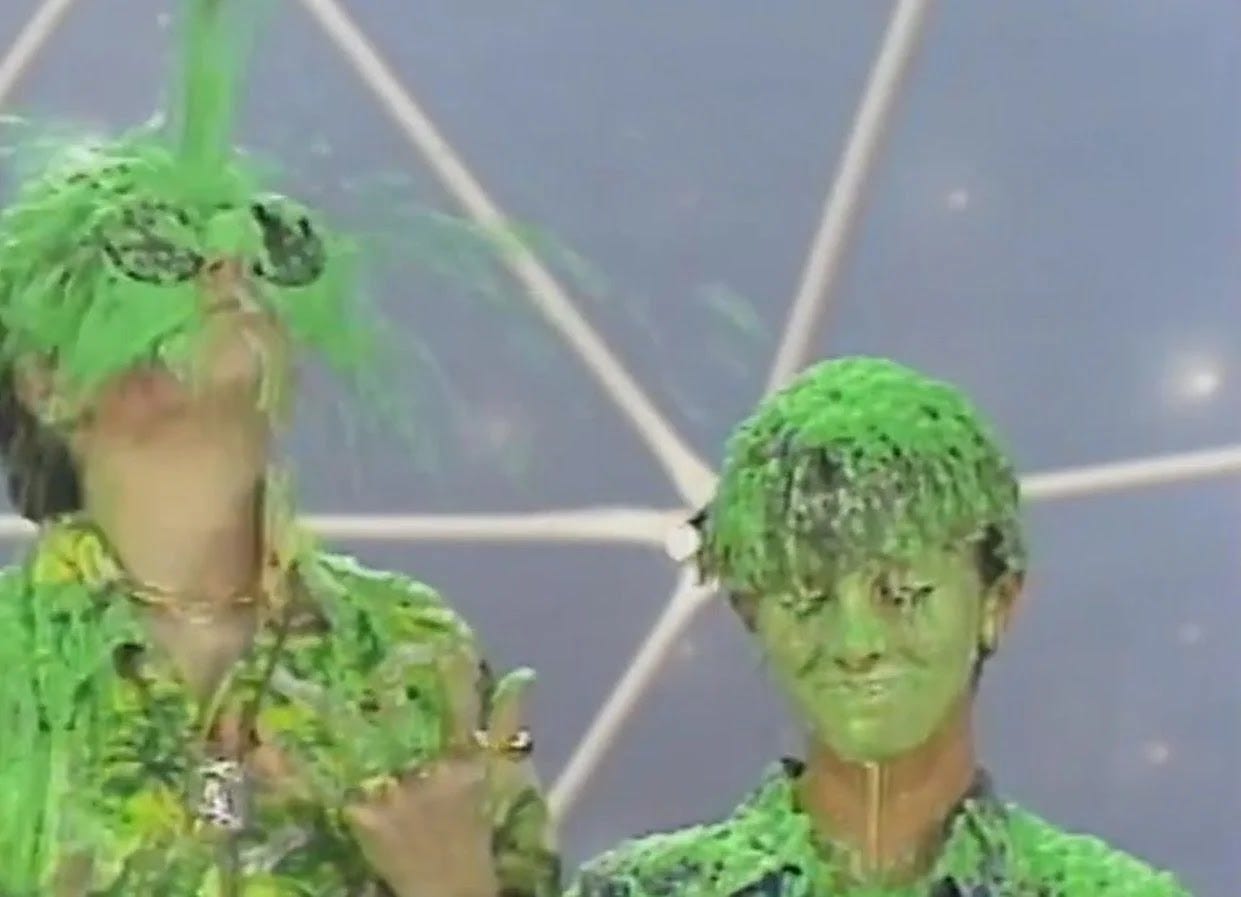
On the iconic Canadian kids show “You Can’t Do That On Television” a cast member saying “I don’t know” could expect green slime to rain down on them. Even Alanis Morissette.
So important. So good. You could be the Ezra Klein of science podcasts🎙️🎧